
In materials preparation and chemical production, dispersing powders uniformly into a liquid is often complicated by the tendency of particles to aggregate. Traditional mechanical stirring, which relies on the shear force of blades, frequently proves inadequate for nanoscale systems or highly viscous media. Ultrasonic dispersers offer an alternative approach: they utilize high-frequency sound waves to generate specific, localized physical conditions within a liquid—all without requiring direct mechanical contact with the material. Hangzhou Precision Machinery Co.,Ltd–JH provides ultrasonic dispersers from small lab scale to large industrial production line.
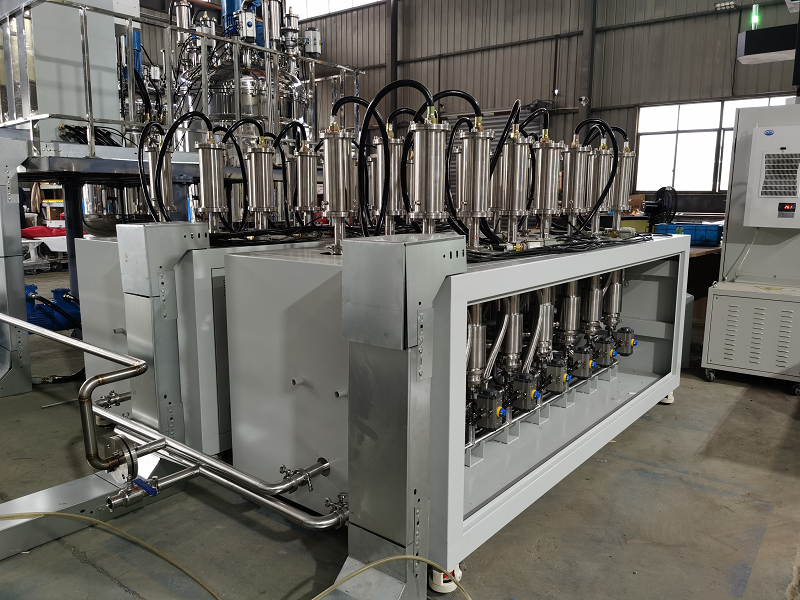
The underlying mechanism is known as the “cavitation effect.”
A transducer converts electrical energy into mechanical vibrations at frequencies typically exceeding 20 kHz; these vibrations are then amplified by a horn (sonotrode) and transmitted into the liquid. During the negative-pressure half-cycle of the sound wave, a multitude of tiny vacuum bubbles form within the liquid. During the subsequent positive-pressure half-cycle, these bubbles are rapidly compressed until they collapse. At the moment of collapse, local temperatures can reach several thousand Kelvin, and pressures can spike to hundreds of atmospheres, accompanied by the generation of high-speed micro-jets. This concentrated energy—acting at the micrometer scale—is sufficient to “pry apart” aggregated particles without damaging the particles themselves. Furthermore, the shockwaves generated by cavitation promote micro-circulation within the liquid, ensuring that the dispersed particles remain uniformly suspended and preventing re-settling.
Compared to traditional methods, ultrasonic dispersion technology offers several practical advantages.
First, the applied force is uniform and controllable; by adjusting power and frequency, the dispersion intensity can be tailored to specific particle sizes or viscosities—making it particularly well-suited for shear-sensitive materials, such as biological macromolecules or nanomaterials. Second, it offers high processing efficiency. Because the cavitation effect occurs simultaneously across countless microscopic zones—effectively functioning as a “multi-point, synchronous operation”—the volume of material dispersed per unit of time far exceeds that of mechanical stirring. Third, it eliminates contact-based contamination. Since energy is transmitted through the liquid medium without the need for grinding media or additional chemical agents, the technology is ideal for applications requiring high purity, such as pharmaceutical manufacturing or the production of electronic pastes. Fourth, it provides operational flexibility: it can handle small-scale samples or be integrated into continuous production lines via circulation loops, and the equipment itself is compact, facilitating easy integration into existing manufacturing setups.
Naturally, this technology also has its limitations.
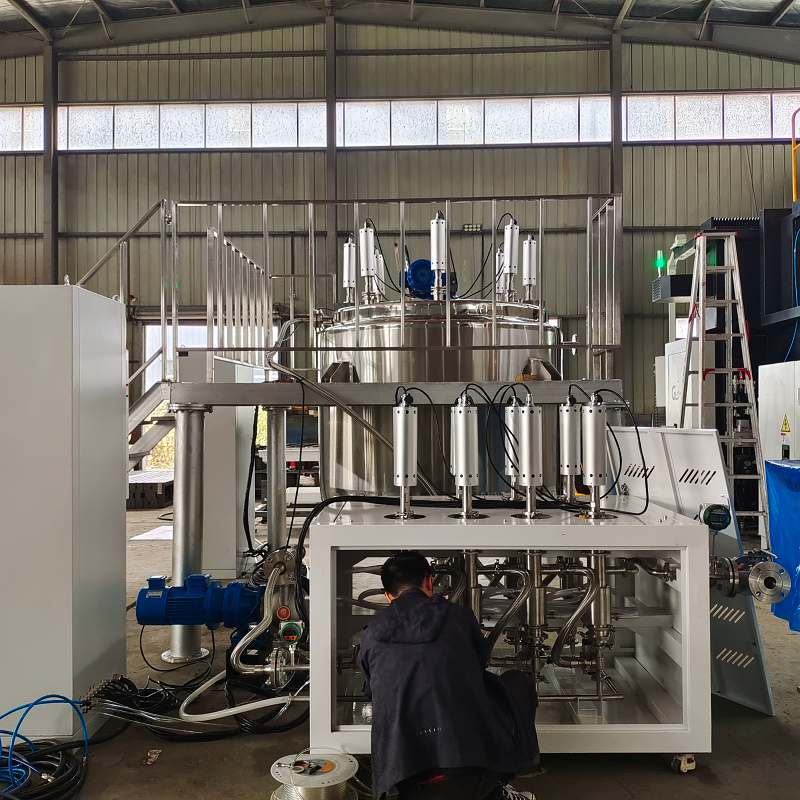
For systems with higher viscosity or a high concentration of coarse particles, cavitation energy dissipates rapidly; in such cases, pre-dispersion or adjustment of the probe position is required. Furthermore, prolonged operation may cause the liquid to heat up, necessitating the use of a cooling jacket to maintain stable performance.
For more professional information, please go to www.hzpmsonic-en.com / www.jh-ultrasonic.com. Hangzhou Precision Machinery Co.,Ltd. Is seeking distributors at all levels worldwide to serve a broader range of specialized clients within the chemical industry, provide them with products that offer superior performance, and create greater value for them.
Post time: Nov-03-2026