
The selection of ultrasonic homogenizer dispersers requires comprehensive consideration of factors such as material properties, dispersion goals, and production scale. Leveraging years of industry experience, Hangzhou Precision Machinery has developed a standardized yet customizable selection system.
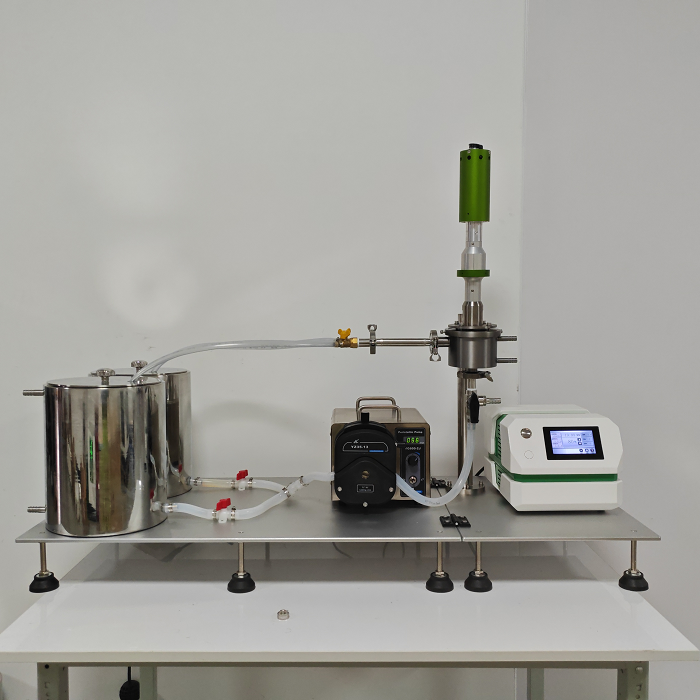
First, select based on the ultrasonic dispersion goal:
For nanoscale dispersion (e.g., graphene, carbon nanotubes), high-frequency (20kHz–100kHz) focused-energy equipment is recommended, as its concentrated cavitation intensity effectively exfoliates layered materials or disaggregates nanoparticles.
For biologically sensitive materials (e.g., proteins, probiotics), low-frequency (20kHz–40kHz) adjustable-energy sterile equipment is preferred to avoid damaging the material’s activity.
Second, determine the model according to production scale:
For laboratory R&D, small benchtop units (processing capacity 0.5L–5L) with laser particle size analyzer interfaces are suitable, enabling real-time monitoring of dispersion results.
For pilot and industrial production, floor-standing or integrated systems (processing capacity 10L–500L) are required, supporting seamless integration into production lines. For instance, dual-frequency ultrasonic dispersers are well-suited for the continuous preparation of photovoltaic pastes.
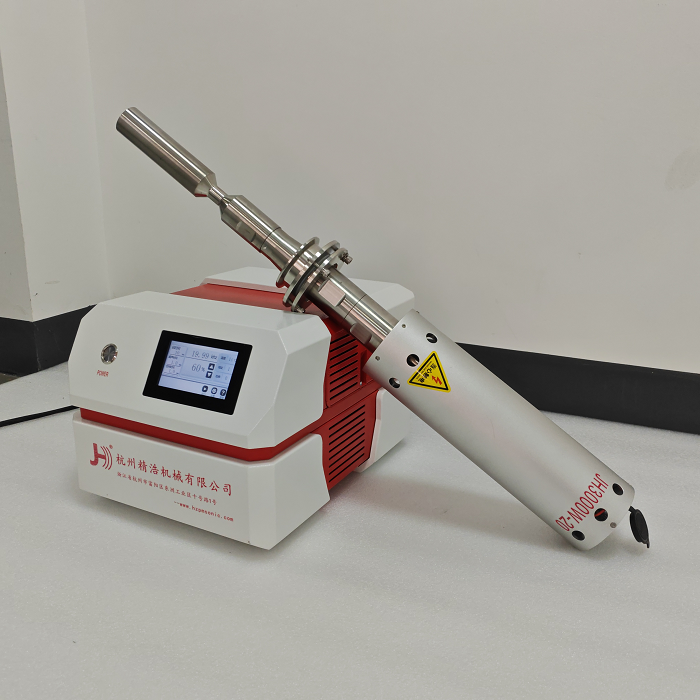
Lastly, optimize parameters based on material properties:
For high-viscosity materials (viscosity ≤ 10,000 mPa·s), dual-frequency synergy or composite stirring systems are recommended. Hangzhou Precision Machinery’s multi-frequency switching technology (20/28/40kHz) automatically matches the optimal frequency combination, addressing resonance dead zones common with single-frequency systems.
For corrosive materials, titanium alloy (TC4) or quartz probes are provided to ensure equipment durability.
Additionally, the company provides parameter optimization services, utilizing a material property database to customize dispersion process solutions for customers.
Post time: Apr-23-2026