
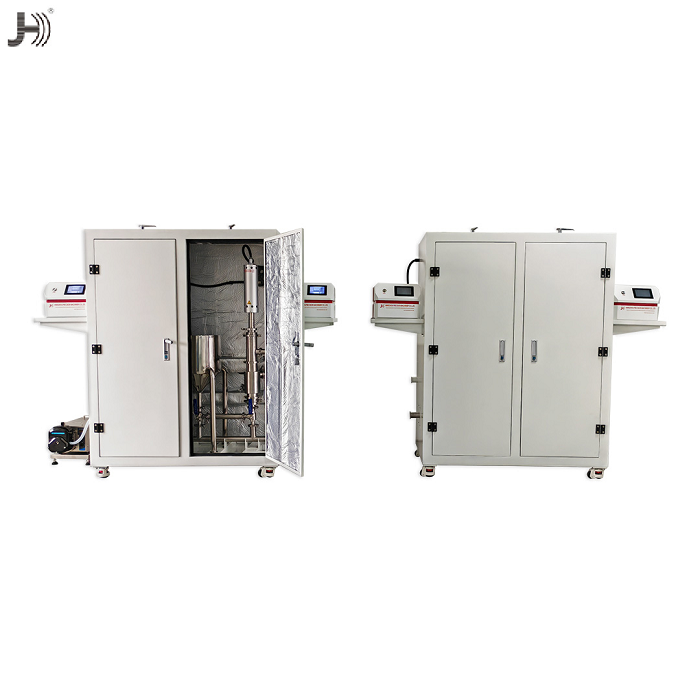
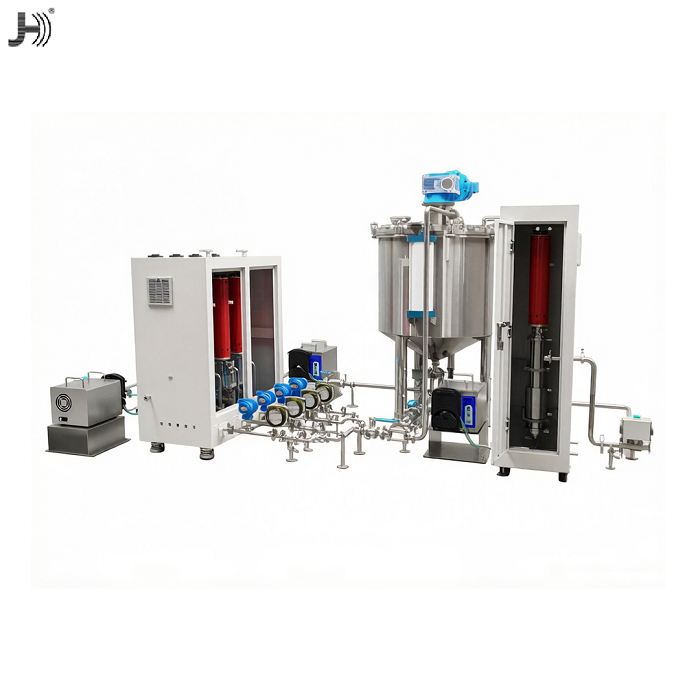
Ultrasonic nano disperser homogenizer utilize the high-frequency ultrasonic cavitation effect to generate instantaneous high-temperature, high-pressure microjets in liquids. This efficiently breaks up agglomerates, exfoliates layered materials, and promotes uniform dispersion of nanoparticles. They are widely used in graphene preparation, nanocoatings, lithium battery slurries, cosmetic emulsions, and biomedicine. The processing effect directly depends on the scientific nature of the operating parameters and procedures. Improper use can not only reduce dispersion efficiency but also damage the equipment or cause sample degradation. Mastering the correct use of ultrasonic disperser homogenizer is key to achieving nanoscale uniformity.
I. Preparation Before Use
Check Sample Compatibility: Confirm that the material can be ultrasonically treated (avoid highly volatile, flammable, or strongly corrosive solvents);
Check Probe Condition: The titanium alloy amplitude transformer should be free of cracks, wear, or oxidation, and the threads should be tight;
Use Suitable Containers: Use glass or stainless steel beakers with a volume 2–3 times the sample volume to prevent overflow.
II. Standard Operating Procedures
Liquid Level Control: The sample liquid level should submerge the probe tip by 5–10 mm. Too shallow a level can cause splashing, while too deep a level reduces cavitation efficiency.
Appropriate Parameters:
Power:Typically set to 30%–70% of the rated power to avoid excessive cavitation leading to particle breakage or heat generation.
Time: Use a “work/intermittent” mode (e.g., 3 seconds on, 2 seconds off), with a total processing time of 5–30 minutes to prevent localized overheating.
Ice Bath Temperature Control: For heat-sensitive samples (e.g., proteins, polymers), place the container in an ice-water bath to maintain a temperature <40℃.
III. Precautions During Operation
Never start without liquid (turn on the ultrasound without liquid), otherwise the transducer will burn out instantly.
Avoid the probe touching the container wall or bottom to prevent resonance damage.
When processing high-viscosity slurries, mechanical stirring can be used to assist circulation and improve uniformity.
IV. Post-Use Maintenance
Immediately rinse the probe with deionized water or ethanol to prevent residue from solidifying;
Dry the amplitude transformer and store it on a dry rack, avoiding impacts;
Regularly inspect cable joints and cooling fans to ensure electrical safety.
Post time: May-08-2026