
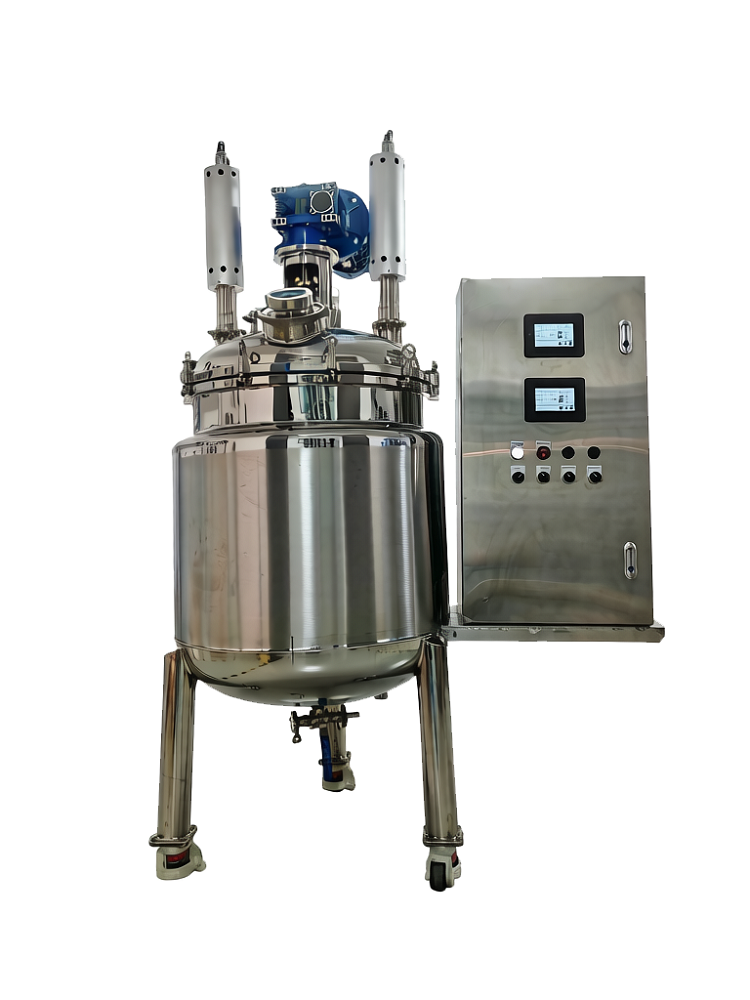
Ultrasonic extraction primarily utilizes the cavitation effect of ultrasound to release target substances from a solid matrix into a solvent, supplemented by mechanical vibration and thermal effects.It is an effective method for rapid extraction. Hangzhou Precision Machinery Co.,ltd.-JH provide the ultrasonic extraction equipment from small lab scale to large industrial working line.
The core components of the equipment include an ultrasonic transducer, a power supply, an extraction container, and a temperature control system. The power supply converts electrical energy into a high-frequency alternating electrical signal, which is transmitted to the transducer. The transducer then converts the electrical signal into high-frequency mechanical vibration, which propagates outward through the liquid medium.
When ultrasound propagates in the liquid, it alternates between high-pressure and low-pressure cycles. During the low-pressure phase, numerous tiny vacuum bubbles are generated inside the liquid, and these bubbles continue to grow. During the high-pressure phase, these bubbles burst violently and instantaneously—this process is the cavitation effect. The instantaneous bursting of bubbles generates short-term high temperatures and pressures locally, simultaneously forming high-speed microjets and strong shock waves. This impact force can rapidly scour the surface of the solid sample, breaking down the cell walls or matrix structure, allowing the analyte encapsulated within to fully contact the extraction solvent, accelerating the dissolution and diffusion of the target substance into the liquid phase.
Besides the core cavitation effect, the continuous mechanical stirring effect of ultrasound can reduce sample precipitation and enhance solid-liquid mass transfer. A certain thermal effect occurs during the process, so most devices are equipped with a temperature control module to regulate the system temperature and prevent thermal decomposition of heat-sensitive target substances. 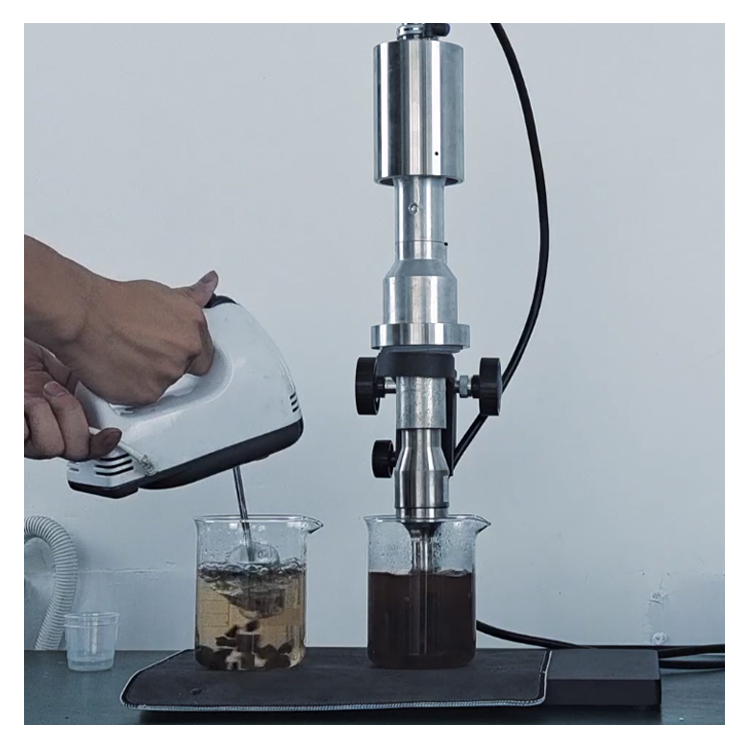
Compared to traditional reflux and leaching methods, ultrasonic extraction does not require high-temperature, prolonged heating, resulting in shorter extraction times and less solvent usage. Immersion probe ultrasound or water bath ultrasound can be selected depending on the sample type. Probe ultrasound offers concentrated energy and higher extraction efficiency; water bath ultrasound provides uniform energy distribution and can process multiple samples simultaneously.
Key parameters affecting extraction efficiency include ultrasonic power, ultrasound time, system temperature, solvent type, and solid-liquid ratio.
Excessive power or prolonged ultrasound time may cause degradation of the target component, thus reducing the recovery rate. During equipment use, proper sound insulation is essential, and the transducer status should be checked regularly to prevent cavitation corrosion of the probe.
This equipment is often used for pretreatment extraction of environmental samples, food, and natural products. It is suitable for rapid extraction of batches of samples and is often used in conjunction with chromatographic instruments for subsequent analysis.
Post time: Sep-08-2026