
Due to the unique properties of nanomaterials, achieving rapid and uniform dispersion has become a crucial traditional problem. Dispersion methods are often time-consuming, labor-intensive, and inefficient, failing to meet the demands of modern industrial production. Ultrasonic nano disperser, based on ultrasonic principles, can achieve rapid and uniform dispersion of nanomaterials.
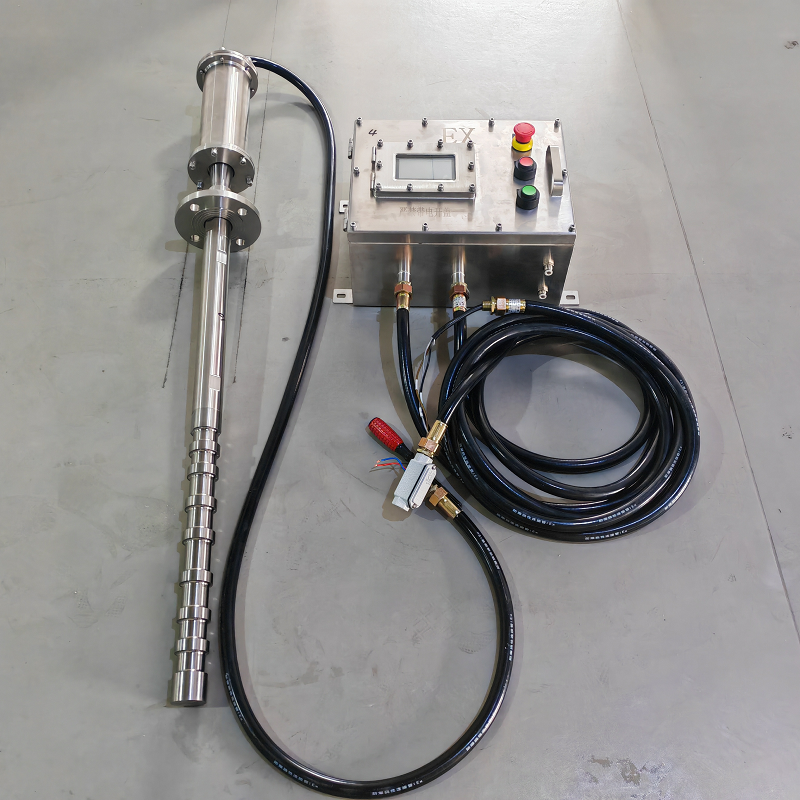
Ultrasonic nano disperser are based on the propagation and energy transfer process of ultrasound in liquid media. When ultrasound propagates through a liquid medium, it causes high-frequency vibrations in the particles, generating strong shock waves and microjets. This effectively breaks down the aggregation on the surface of nanomaterials, resulting in uniform dispersion of nanoparticles in the liquid medium. Simultaneously, the cavitation effect of ultrasound—the creation of cavitation cavities within the liquid—generates a powerful impact force upon instantaneous closure, further disrupting the aggregation of nanomaterials and achieving individual dispersion of nanoparticles or small agglomerates.
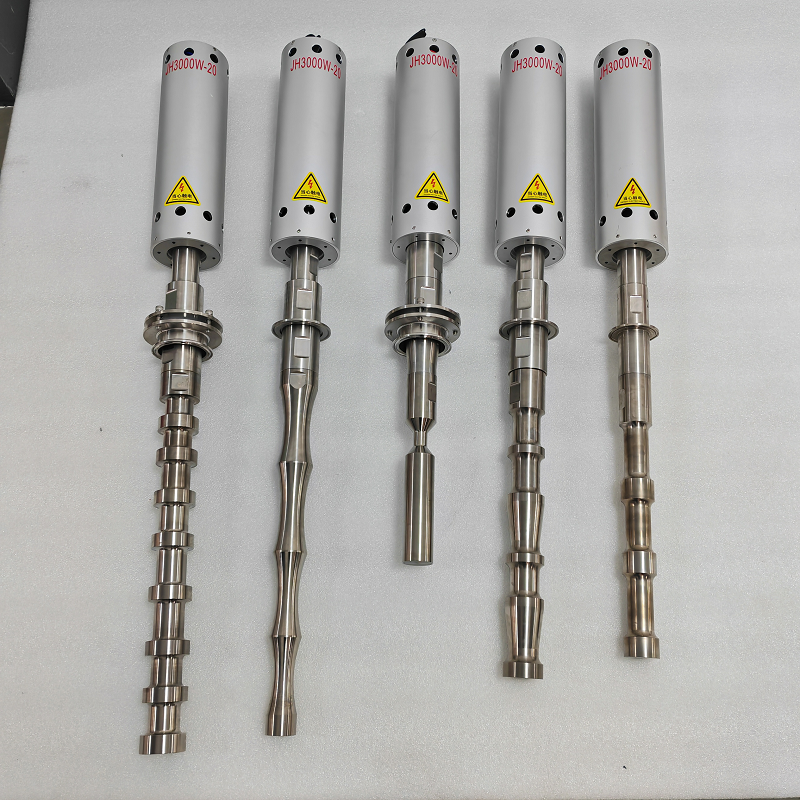
This ultrasonic disperser can rapidly disperse nanomaterials into individual particles or small agglomerates, improving production efficiency and product quality. Furthermore, the shock waves and microjets generated by the cavitation effect ensure uniform dispersion of nanomaterials, preventing aggregation. No chemical reagents are required during the dispersion process, offering advantages such as environmental friendliness and energy conservation. The system exhibits good stability during operation, contributing to reproducible experimental results. Employing an efficient and user-friendly nanomaterial dispersion method, it has broad application prospects. Through its application, rapid and uniform dispersion of nanomaterials can be achieved, improving product quality and efficiency, and increasing nanomaterial production efficiency.
Post time: May-21-2026