
I. Equipment Overview
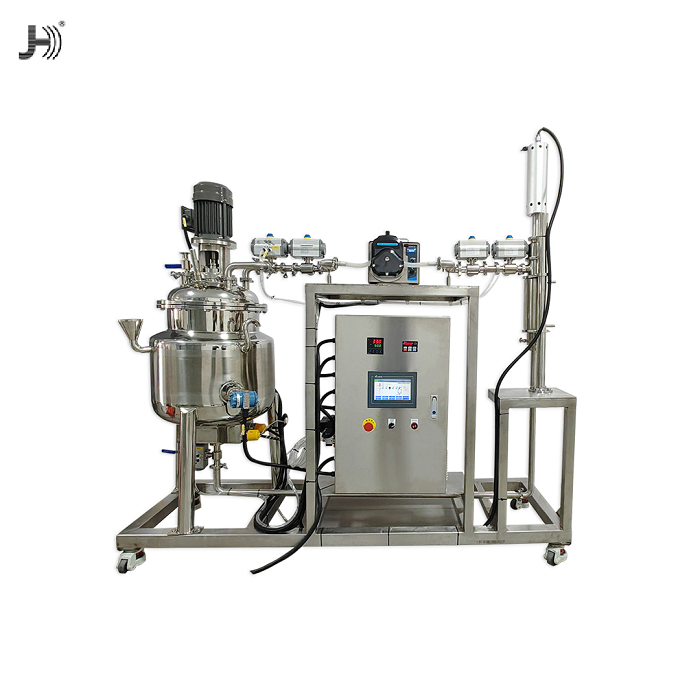
The ultrasonic homogenizer is a precision processing device that utilizes the high-frequency ultrasonic cavitation effect to pulverize, emulsify, homogenize, disperse, and extract liquid materials.
It rapidly breaks down particle agglomerates, ensuring uniform particle size and system stability. Key advantages include high processing efficiency, excellent homogenization results, preservation of material activity, and high controllability. Widely used in fields such as biopharmaceuticals, cosmetics, food and beverage, chemical slurries, and scientific research laboratories, it serves as core equipment for the precision pretreatment of materials.
II. Pre-start Checks
1. Equipment Inspection: Check the main unit, ultrasonic probe, transducer, and connecting cables for damage, aging, or loose connections; ensure the probe is free from deformation or cracks and that all accessories are complete and in good condition.
2. Electrical Inspection: Confirm that the power supply voltage matches the equipment’s rated specifications; ensure the power cord is properly grounded, the socket is dry and free of leakage, and the wiring is neatly arranged without tangles or compression.
3. Material and Container Inspection: Select a suitable, shock-resistant container; ensure the material level covers the probe’s working area (dry running of the probe is strictly prohibited); and ensure the material is free of large, hard impurities that could damage the probe.
4. Environmental Inspection: Place the equipment on a level, stable, and dry workbench; keep it away from flammable, explosive, or corrosive materials; and ensure the operating environment is well-ventilated.
III. Standard Operating Procedure
1. Equipment Assembly and Securing: Vertically mount the ultrasonic probe onto the lifting stand; adjust the height so that the bottom tip of the probe is submerged in the material, positioned 10–20 mm above the container bottom, while ensuring it does not touch the container walls or bottom.
2. Parameter Setting: Connect the power and turn on the device. After the self-test is complete, configure the operating parameters based on material characteristics, including ultrasonic power, operating time, pulse cycle, and temperature control thresholds. When processing an unfamiliar material for the first time, it is recommended to start with a low-power, short-duration trial run.
3. Trial Run and Debugging: After setting the parameters, start the device for a 10–20 second trial run. Observe the operating status; if there are no unusual noises or abnormal heating, and the homogenization process appears normal, formal operation may begin.
4. Formal Homogenization: The device operates continuously according to the set program, utilizing the cavitation effect to homogenize and refine the material.
For highly active or heat-sensitive materials, use an ice-water bath for cooling to prevent high temperatures from damaging the material’s active ingredients.
5. Shutdown and Sampling: Once the program finishes automatically, turn off the power. Wait for the probe to stop vibrating, then slowly lift it out to retrieve the material and complete the operation.
IV. Shutdown and Cleaning Procedures
1. After each operation, the probe must be cleaned immediately. Wipe or rinse the probe surface with pure water or a suitable solvent to remove residual material and prevent it from drying and adhering, which could impair future homogenization performance.
2. After cleaning, wipe the probe dry and store it in a clean, dry location, taking care to avoid impacts or abrasion.
3. For long-term storage, turn off the power, organize the cables, cover the device to protect it from dust, and periodically power it on for a no-load run to maintain the system.
V. Daily Maintenance and Care
1. Probe Maintenance: The ultrasonic probe is a precision component prone to wear. Operating the probe without a load (air vibration) or in a dry state is strictly prohibited, as is subjecting it to impacts or scratches. Regularly inspect the probe surface for wear; replace it promptly if wear is severe to prevent a decline in homogenization efficiency.
2. Cable Maintenance: Regularly inspect the transducer and cable connections; keep interfaces dry and securely fastened to prevent equipment failure caused by moisture or loose connections.
3. Heat Dissipation Maintenance: Ensure ventilation ports remain unobstructed during operation and do not cover the unit’s heat dissipation areas. For prolonged continuous operation, pause the machine periodically to allow for cooling and prevent thermal protection shutdowns.
4. Parameter Specifications: Strictly avoid long-term operation at excessive loads or high power levels; adjust parameters according to requirements to extend the equipment’s service life.
VI. Safety Precautions
1. Do not touch the vibrating probe with bare hands during operation to avoid scratches or pinching injuries caused by high-frequency vibration.
2. Strictly prohibit running the equipment without a load or operating with the probe exposed outside the material, as this can easily cause probe damage or equipment overload.
3. When processing organic solvents or flammable/explosive materials, ensure adequate ventilation and safety measures; strictly prohibit operation in environments with high temperatures or open flames.
4. If the equipment exhibits abnormal noise, error messages, overheating, or abnormal vibration, shut it down and disconnect the power immediately; resume use only after troubleshooting and resolving the issue.
5. Non-professional personnel must not disassemble the main unit or modify internal programs and circuit parameters.
VII. Common Troubleshooting
1. Equipment fails to start: Check the power supply, switch status, and cable connections for looseness; investigate issues such as overload protection or thermal alarm lockouts.
2. Poor homogenization or low efficiency: Check for probe wear, insufficient immersion depth, or excessively low power settings; also consider issues like high material viscosity or abnormal liquid levels.
3. Abnormal vibration or noise: Check for loose probe mounting, contact with the container, transducer failure, or poor electrical connections; retighten and adjust as necessary.
4. Main unit overheat alarm: Caused by prolonged operation, blocked heat dissipation, or power overload; solutions include shutting down to allow cooling, clearing heat vents, and lowering operating parameters.
5. Severe probe overheating: Caused by dry running (vibration without load), excessively high parameter settings, or probe wear and aging; solutions include promptly adjusting operating conditions or replacing the probe.
Post time: Aug-04-2026