
Producing thermodynamically and kinetically stable oil-water nanoemulsions represents a critical manufacturing objective for food, pharmaceutical, and cosmetic formulations. Conventional rotor-stator mixers and high-pressure homogenizers often struggle to achieve sub-200-nanometer droplet dimensions without demanding excessive chemical surfactants or consuming massive mechanical energy. Deploying an ultrasonic emulsifier for oil-water emulsification utilizes high-intensity acoustic cavitation to shatter immiscible liquid phases into uniform nanoscale droplets with exceptional clarity. Hangzhou Precision Machinery Co., Ltd. (JH) develops CE certified ultrasonic emulsification systems engineered to optimize formulation stability, lower surfactant consumption, and deliver consistent rheological performance across global processing facilities.
Drawing from 15 years of specialized acoustic engineering at JH, four key engineering parameters define how industrial ultrasonic emulsifiers outperform traditional mechanical homogenization systems in clean-label liquid processing:
- Acoustic Cavitation Mechanics vs High-Pressure Mechanical Shearing: Evaluating localized micro-jet velocities exceeding 1,000 km/h against mechanical orifice friction, nozzle clogging, and pump maintenance.
- Surfactant Minimization and Long-Term Kinetic Stability: Analyzing sub-200-nanometer droplet size reduction that prevents phase separation, creaming, and Ostwald ripening with minimal chemical emulsifiers.
- CE Certified Sanitary Standards and Corrosion-Resistant Titanium Metallurgy: Inspecting high-purity titanium alloy probes, sanitary tri-clamp fittings, and stainless steel flow reactors for hygienic food and pharmaceutical manufacturing.
- Thermal Management for Sensitive Bioactive Ingredients and Liposomes: Integrating jacketed continuous flow cells to dissipate process heat and protect temperature-sensitive active compounds and delicate botanical extracts.
Acoustic Cavitation Mechanics vs High-Pressure Mechanical Shearing
Traditional mechanical emulsification systems rely on high-pressure piston pumps forcing liquid mixtures through narrow orifices at pressures exceeding 50 to 100 MPa, or high-shear rotor heads spinning at extreme tip speeds. These mechanical approaches generate substantial hydraulic friction, leading to severe component wear, frequent seal replacements, and uneven energy distribution throughout the processing volume. Additionally, mechanical shearing frequently leaves large droplet fractions intact, resulting in broad polydispersity that requires extensive recirculation and elevates operating costs over high-volume production cycles.
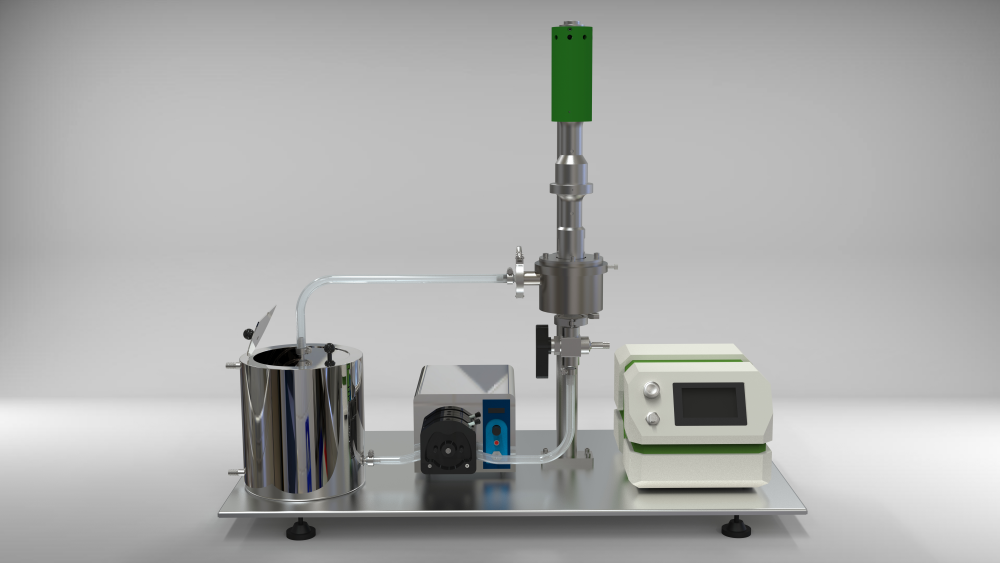
JH ultrasonic emulsification systems operate via high-frequency 20kHz ultrasonic homogenizers driving high-strength titanium alloy horns directly immersed in the liquid stream. Continuous alternating pressure waves generate millions of microscopic cavitation bubbles that grow during low-pressure rarefaction cycles and violently collapse within nanoseconds during compression cycles. This acoustic cavitation produces intense shock waves, extreme localized shear stresses, and high-velocity micro-jets traveling at speeds exceeding 1,000 km/h. These hydrodynamic forces disrupt interfacial tension across oil-water phases, breaking emulsion droplets down to uniform sub-100-nanometer dimensions without high-pressure pump wear, ensuring uniform nanoemulsion dispersion across the entire fluid volume.
Surfactant Minimization and Long-Term Kinetic Stability
In food, cosmetic, and pharmaceutical manufacturing, consumer demand for clean-label products drives processors to minimize synthetic emulsifiers and chemical surfactants. Conventional mixers produce coarse emulsions with droplet sizes between 1 and 10 microns, requiring substantial surfactant volumes to coat large droplet surface areas and prevent droplet coalescence. Excessive surfactant concentrations increase raw material costs, alter product taste or texture, and diminish the sensory elegance of premium cosmetic creams and beverage formulations.
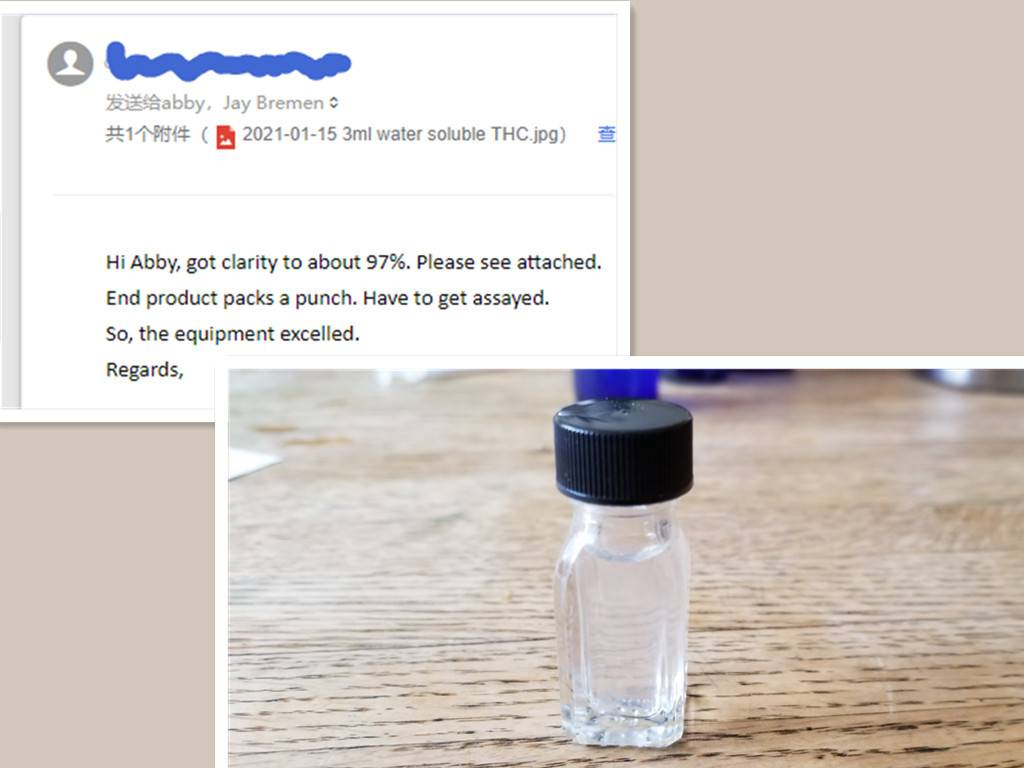
JH ultrasonic emulsification systems achieve nanoscale droplet diameters with narrow size distribution curves, which drastically enhances kinetic stability through intense Brownian motion across fluid batches. Because ultrasonic cavitation creates fine droplets with uniform interfacial packaging, formulations require up to 50% less surfactant to maintain long-term shelf stability. In specialized hydrophobic lipid and botanical oil processing, tailored JH systems can refine droplet diameters down to 10 to 60 nanometers, yielding translucent or optically clear emulsions that significantly boost active compound bioavailability while maintaining long-term self-stability. This capability prevents creaming, sedimentation, phase separation, and Ostwald ripening in functional beverage flavorings, pharmaceutical liposomes, cosmetic facial serums, and active botanical nanoemulsions over extended storage periods.
CE Certified Sanitary Standards and Corrosion-Resistant Titanium Metallurgy
High standards of hygienic processing are vital when manufacturing products destined for human consumption or topical skincare application. Industrial ultrasonic systems from JH are built with certified medical-grade titanium alloy horns that resist cavitation erosion, chemical corrosion, and acid-alkali cleaning cycles across aggressive sanitary formulations. The solid metal probe design eliminates moving internal seals, pistons, or submerged bearings that could harbor bacterial contamination or shed particulate matter into delicate batches during continuous processing runs.
Every industrial system features CE certified electrical and mechanical construction, complying with rigorous European Union engineering safety and build quality standards. Reactors incorporate sanitary quick-connect flanges, 304 or 316L stainless steel circulation loops, and polished internal contact surfaces suitable for CIP (Clean-in-Place) and SIP (Sterilize-in-Place) sanitation protocols. Capable of handling fluid media with viscosities up to 6,000 cP and operating pressures up to 0.6 MPa, these units deliver dependable sanitary performance across multi-shift continuous production schedules. Built for heavy-duty industrial environments, core ultrasonic homogenizer assemblies provide an operational service life exceeding 20,000 hours under 24/7 continuous duty cycles.
Thermal Management for Sensitive Bioactive Ingredients and Liposomes
Many modern nanoemulsion applications involve heat-sensitive active ingredients, such as botanical polyphenols, essential oils, vitamins, probiotic extracts, and pharmaceutical liposomal carriers. High-pressure mechanical homogenizers generate rapid internal temperature spikes during fluid compression, often heating delicate formulations past critical thermal degradation thresholds and compromising product potency.
JH addresses this processing challenge by combining ultrasonic homogenizers with specialized double-jacketed flow-through reactors and temperature-controlled circulation loops. Because fluid passes through the focused acoustic cavitation zone continuously, cooling fluid circulating through external jackets rapidly removes process heat from the reaction stream. Digital generators monitor and maintain liquid temperatures below 100°C, protecting delicate active compounds from thermal breakdown while ensuring complete droplet size reduction across all processing stages, which preserves active biological potency throughout extended continuous production runs.
Single-Source Ultrasonic Emulsification Advantage from Laboratory to Production
Partnering directly with a dedicated ultrasonic manufacturer provides food, pharmaceutical, and cosmetic brands with scalable processing architectures tailored to their exact formulation rheology and commercial output goals. JH offers a continuous scale-up pathway starting from 500W and 1000W laboratory probe units for recipe optimization, extending through 5L to 20L pilot circulation systems, up to 1500W and 3000W industrial multi-unit ultrasonic homogenizer production skids. This factory-direct engineering support accelerates pilot validation and commercial plant commissioning compared to working with generic equipment distributors that lack acoustic modeling expertise, custom reactor fabrication, and dedicated application testing laboratories, which ensures that production lines scale up smoothly from initial lab batches to high-volume commercial runs with complete process predictability.
Conclusion
Transitioning from mechanical shearing to ultrasonic acoustic cavitation allows industrial processors to achieve superior nanoemulsion clarity, long-term kinetic stability, and significant surfactant savings. Backed by 15 years of ultrasonic manufacturing expertise, CE certification, and precision titanium metallurgy, JH provides food, pharmaceutical, and cosmetic manufacturers with dependable, sanitary emulsification systems engineered for continuous 24-hour industrial duty. Each system is designed for high energy efficiency, sanitary cleanability, and precise thermal control, helping formulation scientists optimize product performance across diverse commercial applications and establish a reliable production standard for sanitary nanoemulsification.
To request sanitary ultrasonic emulsifier technical specifications, flow reactor dimensional models, emulsion droplet test data, or custom system quotations for your processing lines, visit the official company portal: https://www.hzpmsonic-en.com/. For direct engineering consultations regarding nanoemulsion recipe optimization, surfactant reduction trials, flow cell configuration, and scalable industrial system configurations for commercial plants, contact the technical sales department.
Post time: Aug-28-2026