
Manufacturing high-energy-density lithium-ion batteries requires flawless homogeneity in cathode and anode electrode slurries. When blending active materials like lithium iron phosphate or high-nickel ternary compounds with conductive carbon black, carbon nanotubes, and polymeric binders, conventional planetary mixers struggle to overcome strong van der Waals agglomeration forces. Deploying an ultrasonic battery slurry dispersion system introduces intense localized acoustic cavitation that disintegrates sub-micron conductive agent clusters and builds a continuous conductive percolation network across the slurry. Hangzhou Precision Machinery Co., Ltd. (JH) engineers high-power ultrasonic slurry mixing and circulation systems designed to optimize slurry rheology, lower dynamic viscosity, and ensure exceptional electrochemical consistency across commercial cell manufacturing facilities.
Drawing from 15 years of specialized ultrasonic homogenizer engineering at JH, overcoming electrode coating defects requires peeling back the core layers of slurry rheology and cavitation fluidics. Battery process engineers must analyze why macroscopic mechanical impellers leave microscopic conductive clusters intact, and evaluate how localized acoustic micro-jets generate extreme shear stresses without fracturing active cathode crystal particles. In addition, examining acoustic de-agglomeration reveals how releasing trapped solvent lowers apparent slurry viscosity by 20% to 40%, enabling higher solid loading formulations, while medical-grade titanium metallurgy and double-jacketed thermal management prevent metallic contamination and protect heat-sensitive binders during continuous high-throughput circulation.
Limitations of Mechanical Planetary Mixing in High-Viscosity Slurries
Traditional battery electrode preparation relies heavily on mechanical planetary mixers, high-speed dispersers, or dual-shaft impellers to blend powders with solvent-binder matrices. While mechanical impellers effectively achieve macro-scale blending of bulk powders, their shear rate diminishes rapidly as distance from the blade increases. In high-viscosity slurries ranging between 2,000 and 6,000 cP, low-shear dead zones form throughout the mixing vessel, leaving microscopic carbon nanotube and conductive carbon black agglomerates intact.
Prolonging mechanical mixing cycles in an attempt to break these stubborn agglomerates leads to severe secondary processing problems. Extended high-speed mechanical shearing induces excessive frictional heat that promotes solvent evaporation and premature binder gelation, while mechanical impacts risk fracturing delicate cathode secondary particles into inactive micro-debris. The resulting slurry exhibits broad particle size polydispersity and agglomerate clusters that manifest as surface pinholes, coating streaks, and uneven electrical resistance across dried electrode foils, degrading battery energy density—a processing bottleneck that prompted JH engineering teams to pioneer in-line acoustic cavitation solutions.
Acoustic Cavitation Mechanics and Conductive Network De-Agglomeration
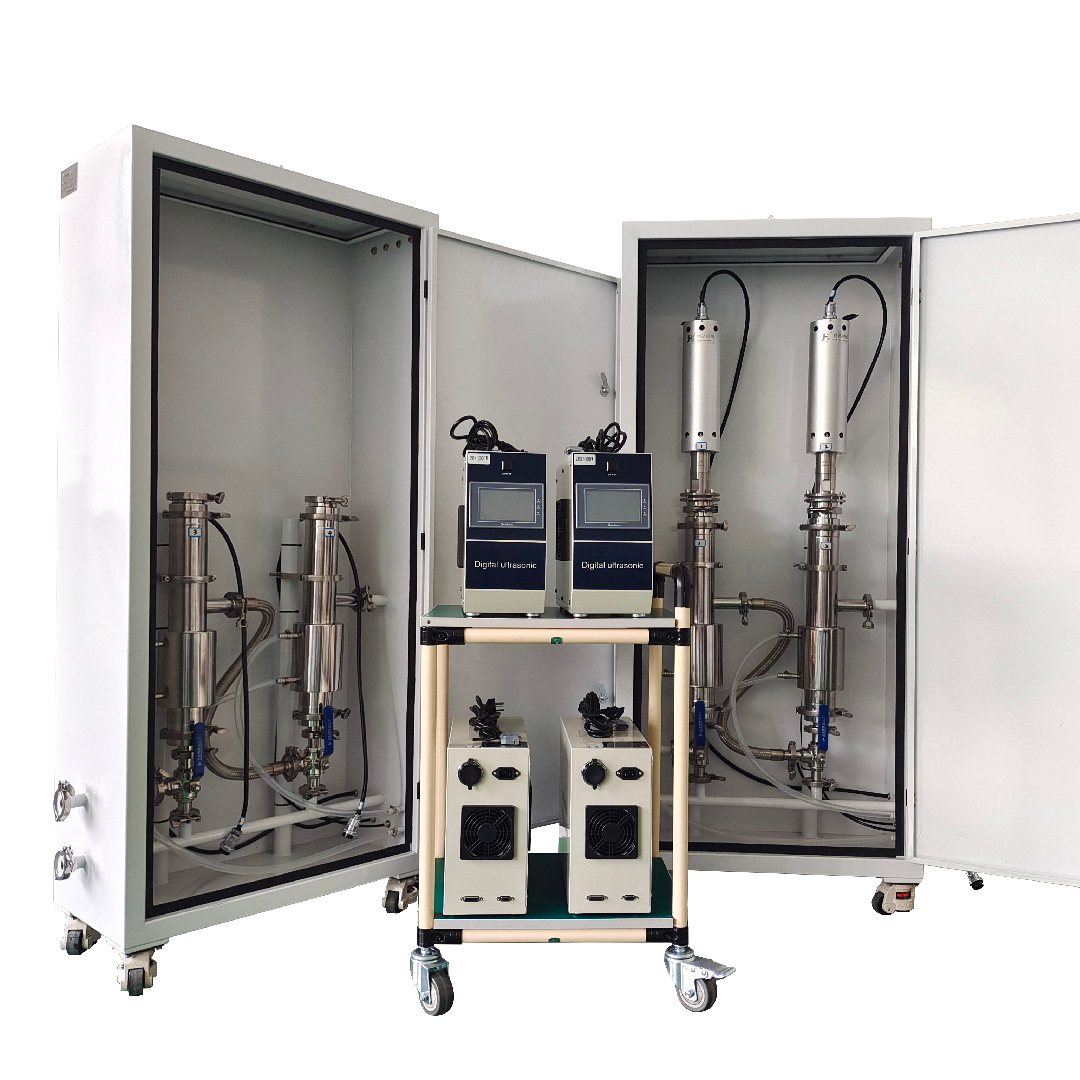
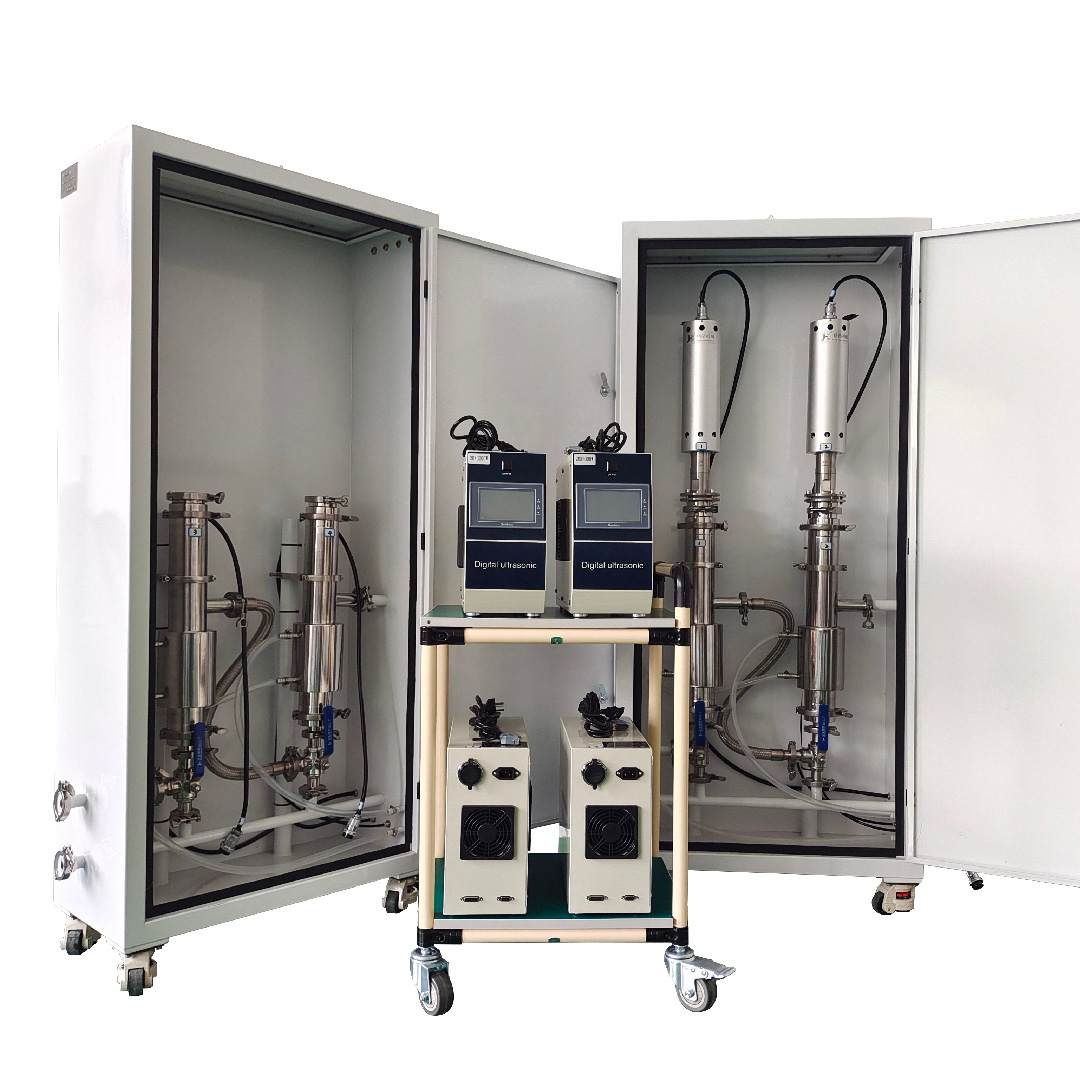
JH ultrasonic battery slurry dispersion systems operate through high-power 20kHz ultrasonic homogenizers driving titanium alloy probes directly immersed in the flowing slurry stream. As high-amplitude acoustic waves propagate through the fluid medium, alternating high-pressure and low-pressure cycles generate millions of microscopic cavitation bubbles. These bubbles expand during rarefaction cycles and violently implode during compression phases, generating localized micro-jets with velocities exceeding 1,000 km/h and intense acoustic shock waves.
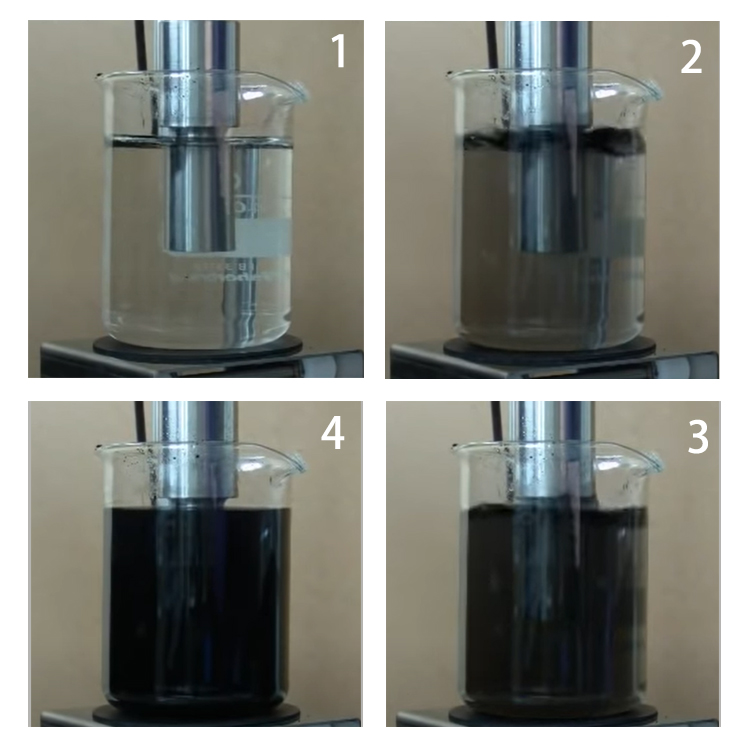
JH systems leverage these localized cavitation forces to shatter the strong cohesive van der Waals bonds holding conductive carbon black and carbon nanotube bundles together. Because acoustic cavitation delivers uniform energy at the sub-micron scale rather than macro-mechanical cutting, it disentangles nanoscale conductive networks without cleaving or degrading the crystalline morphology of active lithium iron phosphate or ternary cathode materials. This targeted nanoscale de-agglomeration establishes an intimate, continuous conductive network that reduces internal battery resistance, enhances high-current discharge power density, and allows electrode manufacturers to lower the total dosage of expensive conductive additives and polymeric binders.
Rheological Viscosity Reduction and High Solids Loading Optimization
Conductive agent agglomerates trap significant volumes of liquid solvent and polymeric binder within their porous internal structures, effectively immobilizing liquid that should contribute to slurry fluidity. This immobilization increases apparent slurry viscosity, forcing battery manufacturers to add excess solvent like N-methyl-2-pyrrolidone (NMP) or deionized water to maintain pumpable rheology during slot-die coating operations. Excess solvent content increases drying oven energy consumption, slows coating line speeds, and elevates operational costs across cell production plants.
When JH ultrasonic flow-through homogenizers de-agglomerate conductive clusters, trapped solvent molecules are instantly liberated back into the continuous bulk phase. This release produces a dramatic 20% to 40% reduction in apparent slurry viscosity under identical shear rates, transforming thick paste-like slurries into fluid, easily coatable dispersions. Cell manufacturers can exploit this rheological transformation to increase solids loading up to 70% or higher, reducing drying oven residence times, eliminating coating cracks, accelerating commercial electrode throughput, and substantially improving post-coating electrolyte absorption for extended cell cycle life.
Titanium Metallurgy and Thermal Management for Binder Integrity
Electrode slurry processing demands absolute material purity, as trace metallic particle contamination can penetrate separator membranes and trigger internal micro-short circuits in finished battery cells. JH ultrasonic mixing systems eliminate submerged rotating mechanical seals, gears, and rubbing stator components that generate metallic wear debris. All fluid-contacting acoustic probes are precision-machined from certified medical-grade titanium alloy, providing exceptional resistance to acoustic cavitation erosion and chemical corrosion in aggressive NMP and aqueous slurry environments.
To safeguard thermal-sensitive binders such as polyvinylidene fluoride (PVDF) and carboxymethyl cellulose (CMC), JH integrates specialized double-jacketed stainless steel flow cells into the circulation loop. Digital ultrasonic generators continuously monitor liquid temperatures and maintain fluid streams well below 100°C by circulating chilled water through external cooling jackets. This low-temperature acoustic processing prevents PVDF binder degradation, eliminates thermal solvent vaporization, and preserves the active material’s specific gram capacity, ensuring long-term slurry pot-life and reliable electrochemical performance across multi-shift continuous production operations.
JH Factory-Direct In-Line Ultrasonic Slurry Integration from Pilot to Megawatt Production
Scaling advanced battery slurry formulations from laboratory research to gigawatt-scale production requires scalable acoustic flow architectures with proven operational predictability. JH provides a continuous industrial scale-up pathway, starting from 500W and 1000W laboratory ultrasonic probe units for formulation testing, extending to 5L and 20L pilot circulation systems, up to 2.0kW and 3.0kW multi-unit ultrasonic homogenizer inline industrial flow-cell skids. Operating at 20kHz with precise 30% to 100% digital amplitude control, JH ultrasonic slurry processors handle fluid viscosities up to 6,000 cP and operating pressures up to 0.6 MPa, seamlessly integrating with continuous twin-screw extruders and storage tanks to deliver consistent slurry quality across high-volume battery manufacturing lines with complete process predictability.
Conclusion and Ultrasonic Battery Slurry System Sourcing Portal
Integrating high-intensity ultrasonic cavitation into battery slurry manufacturing bridges the critical processing gap between raw powder agglomeration and homogeneous electrode coating. Backed by 15 years of ultrasonic homogenizer innovation, certified titanium metallurgy, and CE compliance standards, JH provides global lithium battery and energy storage manufacturers with high-efficiency slurry dispersion solutions engineered for continuous 24-hour industrial duty. Each system delivers significant viscosity reduction, superior conductive network dispersion, and proven scalability, establishing a reliable standard for next-generation lithium battery manufacturing and high-performance energy storage applications.
To request technical specifications for ultrasonic battery slurry dispersion systems, flow reactor dimensional models, slurry viscosity test reports, or custom production skid quotations, visit the official company portal: https://www.hzpmsonic-en.com/. For direct engineering consultations regarding cathode de-agglomeration trials, high-solids formulation optimization, flow cell configuration, and inline gigawatt battery plant integration, contact the technical sales department.
Post time: Sep-03-2026