
Traditional extraction methods for Chinese medicinal materials—such as reflux, decoction, and maceration—often suffer from drawbacks including long processing times, high temperatures, degradation of active ingredients, low extraction yields, and high energy consumption.
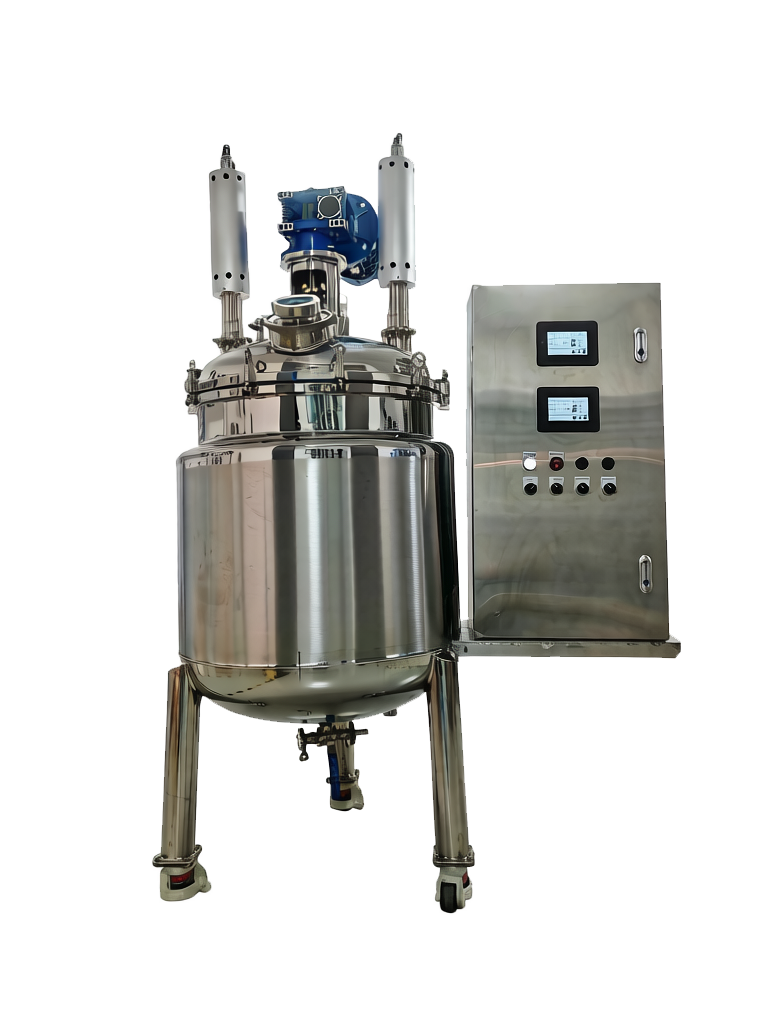
Ultrasonic extraction equipment for plants utilizes physical effects such as ultrasonic cavitation, vibration, cell wall disruption, and emulsification. It enables the disruption of plant cell walls at low temperatures and within short timeframes, accelerating the release and dissolution of active ingredients—such as flavonoids, polysaccharides, alkaloids, volatile oils, and saponins—into the solvent. Offering advantages such as high efficiency at low temperatures, preservation of ingredient integrity, eco-friendliness, and broad applicability, this technology is widely used for the large-scale extraction of medicinal materials derived from roots/rhizomes, flowers/leaves, fruits, and seeds. This proposal standardizes equipment process parameters, operating procedures, material suitability, and quality control points, providing a standardized basis for the deep processing of Chinese medicinal materials.
Ultrasonic Extractor Working Principle:
The ultrasonic extraction equipment employs a high-frequency ultrasonic transducer to generate mechanical vibrations, creating a multitude of transient micro-bubbles within the extraction solvent. The rapid collapse of these bubbles triggers a cavitation effect, generating localized high temperatures, high pressures, micro-jets, and shock waves.
These forces rapidly shatter plant cell walls and fibrous tissues, disrupting cellular structures and facilitating the swift release, diffusion, and dissolution of intracellular active ingredients into the solvent. Integrated constant-temperature control and circulating agitation systems significantly enhance dissolution efficiency while preventing the degradation or loss of heat-sensitive ingredients often caused by high-temperature decoction.
III. Scope of Applicable Traditional Chinese Medicinal (TCM) Materials
This equipment is suitable for extracting active ingredients from the vast majority of plant-based TCM materials, covering mainstream processing categories:
Flowers and leaves: Honeysuckle, chrysanthemum, mint, mulberry leaf, rose, etc. (suitable for extracting heat-sensitive volatile oils).
Roots and rhizomes: Astragalus, Angelica sinensis, ginseng, licorice, kudzu root, Salvia miltiorrhiza, etc. (efficient cell-wall disruption for high-fiber, hard materials).
Fruits and seeds: Goji berry, cassia seed, Schisandra berry, hawthorn, etc.
Barks, branches, and leaves: Eucommia bark, Phellodendron bark, mugwort leaf, loquat leaf, etc.
Targeted extraction of active ingredients such as plant polysaccharides, total flavonoids, alkaloids, saponins, volatile oils, and polyphenols.
IV. Core Process Parameter Settings (General Standards)
Ultrasonic extraction efficiency is directly influenced by power, temperature, time, solid-liquid ratio, and frequency. Based on the physical properties of the TCM materials, the standardized process parameters are as follows:
Extraction time: 20–40 min (reduces processing time by over 60% compared to traditional decoction).
1. Pre-treatment of TCM materials
3. Constant-temperature ultrasonic extraction
5. Concentration/Paste recovery/Storage
Low-temperature extraction (≤40°C), short-duration ultrasound (20–25 min), and low-power operation maximize the retention of volatile oils and flavonoid active ingredients, preventing degradation due to high-temperature oxidation.
No excessive pulverization required;
medium-power ultrasound applied after soaking at room temperature (approx. 45°C) effectively dissolves polyphenols, pigments, and active polysaccharides, preventing incomplete extraction caused by encapsulation within fruit peels.
Higher yield: Thorough cell wall disruption results in a higher extraction rate of active ingredients compared to traditional decoction methods.
Strict temperature control: Operation at excessive temperatures is strictly prohibited to prevent the decomposition or carbonization of active ingredients.
Prompt cleaning: Equipment is cleaned immediately after processing medicinal materials with high sugar or mucilage content to prevent scaling or adhesion that could impair performance.
Post time: Jul-16-2026